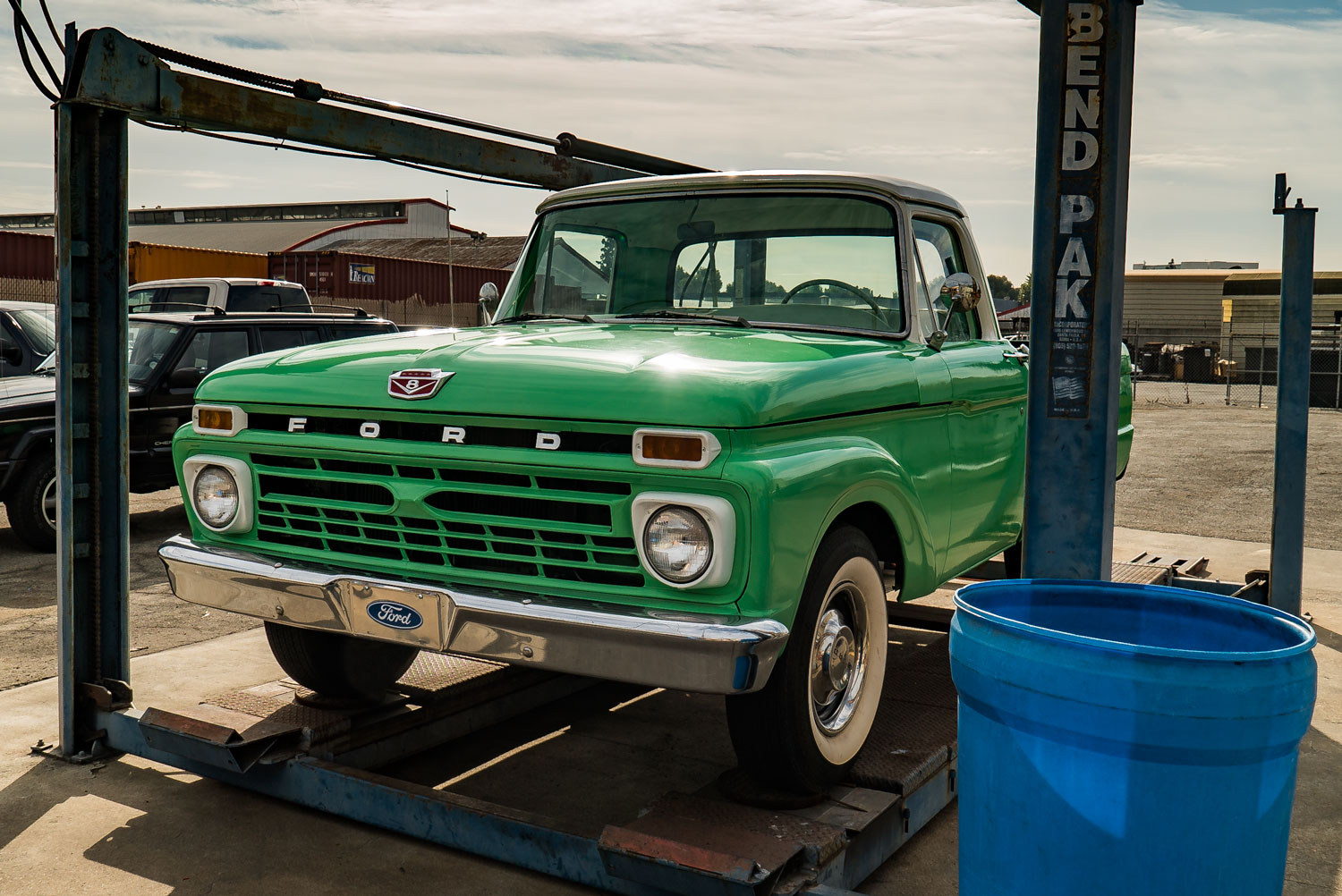
Before lowering your 1966 Ford F100, careful planning is vital to get the look, feel, and drive you want without overspending. This is the first post from a four-part series on the 1966 Ford F100 budget makeover guide.
In this part, we’ll cover the initial groundwork for a Ford F100 budget build, which includes measuring ride height, checking alignment, reviewing caster, and outlining your budget. Later parts of this series will guide you through the full process.
We’ll discuss removing the factory suspension in Part Two, reassembling the front suspension and installing the DJM lowering components in Part Three, and lowering the rear suspension in Part Four.
For now, let’s focus on planning your Ford F100 budget build up front and how doing that makes the entire build smoother and keeps costs manageable.
Measuring Your Ford F100 Height
Start with the basics. Know your Ford F100 height before any suspension work. Measure all four corners of the truck on a level surface. This gives a clear picture of where the truck sits and serves as a reference after installation.
Recording these measurements prevents surprises later and helps you plan the desired drop worry-free. Getting assistance is helpful when checking multiple corners. Even small differences in ride height can affect alignment, caster, and overall handling.
Checking Alignment Before the Drop
Knowing your 1966 Ford F100 alignment specs before lowering is critical. Check the caster, camber, and toe settings. Understanding the starting alignment makes sure that once your suspension is installed, the truck drives straight and handles predictably.
Small caster adjustments can make a noticeable difference for trucks without power steering. DJM Suspension beams are designed with more caster room, improving steering feel. On a budget build, aiming for around three degrees of caster at the front improves drivability without extra components.
Reviewing Caster and Steering Feel
Caster impacts how the truck tracks and how responsive the steering feels. A proper caster allows the wheels to return to the center naturally. On older trucks without power steering, this can be the difference between smooth turns and tiring steering.
The right lowering beams provide additional caster, which helps maintain proper steering geometry. Even a modest increase improves control without expensive upgrades. Understanding caster before the drop ensures your lowered Ford F100 handles safely and predictably.
Budget Planning for Your Build
A budget mindset keeps the build manageable. For this truck, the purchase price is around $8,100. Key electrical and door components may bring total costs to roughly $8,600. Allocating $1,000 for suspension work keeps the total under $9,600, delivering a lowered, functional truck that looks great and drives well.
Budget planning allows room for future upgrades. Prioritize essential fixes first, like brakes and steering components, before cosmetic or performance enhancements.
Suspension Components for a Budget Drop
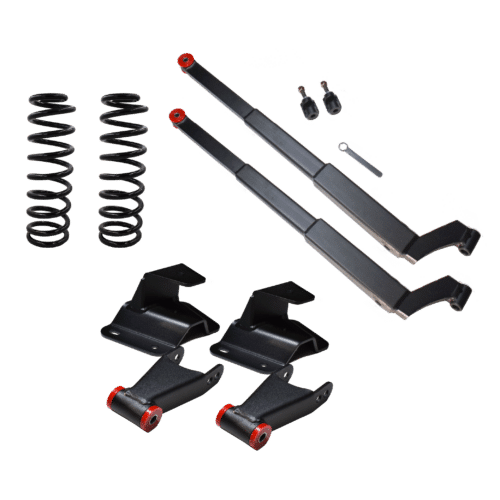
DJM Suspension offers complete solutions for 1965–1972 Ford F100 models and other models and makes, too. For this job, you’ll typically need a 3-inch front and 4-inch rear lowering kit with springs, which provides the right drop without compromising ride quality.
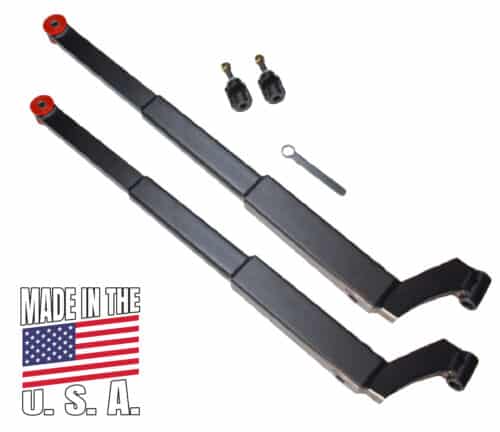
You might also want to upgrade radius arm for your Ford f100 to maintain alignment and geometry. Remember, selecting the right parts upfront simplifies installation and keeps the build organized.
At DJM Suspension, we offer a full range of Ford F100 parts. You can simply pick the one you want and order it online without breaking the bank. With a vast inventory like ours, you can get the part for virtually any condition, drop goals, and budget.
Why Baseline Measurements Matter
Recording baseline ride height and alignment helps you compare pre- and post-lowering results. With accurate Ford F100 alignment specs, you can see how much drop each corner achieves and make adjustments if necessary. This is especially important on a budget build where every component counts.
Without a reference, you risk overcorrecting or misaligning suspension parts, leading to uneven handling, premature wear, or additional costs. Knowing your starting point guides a smooth transformation.
Common Considerations on a Budget Build
Budget trucks often need minor fixes, including electrical quirks, door latch repairs, or cosmetic imperfections. Allocate your funds wisely, and keep in mind that suspension upgrades improve drivability more than aesthetic tweaks.
Radial tires can improve performance and stance, but they may not fit within a tight budget. Focus first on alignment and ride height adjustments, then consider visual upgrades later. Planning the drop upfront helps you prioritize and avoid overspending.
Preparing for the Lowering Process
Before installation, make sure your truck is on a safe, level surface. Lift it with rated hydraulic jacks or a lift. Double-check your measurements, review alignment specs, and have all tools and components ready.
Having DJM Suspension lowering beams and a kit on hand streamlines the process, and referencing your measurements ensures you achieve the intended drop and handling.
Conclusion: Plan Smart, Build Confidently
Starting your Ford F100 budget build with clear measurements, alignment review, and budget planning sets the tone for a smooth installation. Using 1966 Ford F100 alignment specs as a reference makes sure your lowered truck handles confidently and looks balanced.
When you’re ready to take the next step, check out Part Two of our series, which will walk you through removing the factory suspension. All the parts you need for your build can be found at DJM Suspension, giving you quality components without breaking the bank.
This approach keeps your Ford F100 budget build on track while delivering a truck that drives and performs as intended. If you need help with your build or parts, call 310-538-1583 or reach out to one of our experts.
Products Featured in This Blog
Part 2 - 66 F100 Budget Project
DJM's F100 Budget Project move's into removing the factory suspension!
Part 3 - 66 F100 Budget Project
Part 3 of the DJM 1966 Ford F100 Budget Project is about installing your DJM Dream Beams
Part 4 - 66 F100 Budget Project
DJM 1966 Ford F100 Budget Project gets the rear lowered about 4 inches