You've probably already read Episode 1, where we explored the truck’s starting condition, initial plans, and what the team learned about the upgrades ahead. Episode 2 moved the project forward in a big way.
Building a project truck took planning, patience, and the right parts. In this episode, the team began transforming a workhorse 1997 Ford F-150 into a classic street truck with a lowered stance, a manual transmission, and serious V8 power.
The project continued with a clear vision: combine old school styling with dependable performance using a 1997 F150 lowering kit, a 460 big block engine swap, and a practical approach that any enthusiast could appreciate.
A Clear Vision for the F-150 Project Truck
Every successful truck build starts with a goal. So, instead of chasing the latest trends, this project focused on building a truck that delivered classic muscle truck character while staying within a realistic budget.
The foundation was a 1997 regular cab, long bed, two-wheel drive Ford F-150 that had already proven itself as a dependable daily driver. After thousands of reliable miles, the truck earned a complete makeover rather than retirement.
The overall plan included:
- Lowering the truck with a 1997 F150 lowering kit
- Installing a 460 big block engine swapped from a bus up in Maine
- Adding a four-speed manual transmission
- Upgrading to a Ford 9-inch rear axle
- Giving the truck a traditional hot rod appearance
- Running classic 15-inch wheels with wide rear tires
Rather than building an all-out race truck, the goal was to create a powerful street truck with excellent torque, timeless styling, and plenty of personality.
Why a 4/6 Drop Made Sense
Lowering the truck was one of the first major upgrades planned for the build. The goal was to give it a more aggressive appearance while helping it handle better on the street.
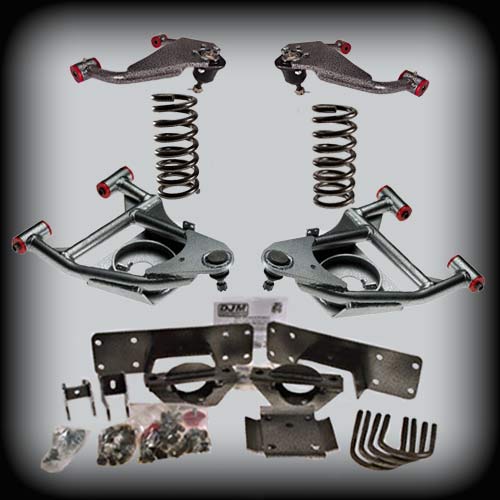
A Ford F150 4/6 drop lowered the front approximately four inches and the rear six inches. This created the level stance that many enthusiasts preferred while keeping the truck practical for street driving.
The benefits included:
- Lower center of gravity
- Reduced body roll
- Better cornering stability
- Improved appearance
- More balanced stance
Instead of using shortcuts that could affect ride quality, the project focused on a complete suspension system designed specifically for the truck.
If you're planning a similar build, the 1997-2003 Ford F-150 4"/6" complete lowering kit from DJM Suspension offers the components needed for a professional installation.
Preparing the Truck Before Suspension Installation
Before any suspension work began, the truck needed to be stripped down so rust repairs could be completed properly. We spent considerable time removing components that blocked access to the body and frame.
The team removed:
- Truck bed
- Tail lights
- Wiring harness
- Fuel filler
- Bed hardware
Like many older New England trucks, rust became one of the biggest obstacles. Several bed bolts refused to loosen after years of exposure to snow, salt, and moisture.
Rather than forcing damaged hardware to cooperate, the bolts were carefully cut away so the bed could be lifted safely.
This preparation may have seemed slow, but it allowed the body repairs to be completed correctly before installing the new suspension components.
Addressing Rust Before Building the Truck
Any suspension installation should start with a solid truck.
After meeting with an experienced collision repair specialist, the project shifted toward repairing rust before performance upgrades continued.
The inspection identified corrosion in several common F-150 problem areas:
- Rocker panels
- Cab corners
- Areas behind the front fenders
Instead of covering damaged metal with new panels, the recommendation was to remove every rusted section until solid steel was exposed.
Replacement panels were then welded into clean metal, creating a repair that lasted much longer than simply patching over corrosion.
If you're working on a 1997 Ford F150 restoration, addressing rust early saves time, labor, and frustration later in the project.
The 460 Big Block Engine Swap
Suspension was only part of this build. The long-term performance plan centered around a 460 big block engine swap sourced from a retired bus up in Maine. Instead of chasing maximum horsepower numbers, the engine build focused on dependable street performance.
The combination included:
- Mild camshaft
- Proper intake manifold
- Correct carburetor
- Free-flowing exhaust
- Strong torque throughout the RPM range
Backing the engine with a four-speed manual transmission created a driving experience that matched the truck's classic personality.
Combined with the lowered suspension, the finished truck looked, sounded, and drove like an old school street machine.
Why a Complete Lowering Kit Was Worth It
Many enthusiasts consider lowering parts because they appear less expensive initially. However, a complete suspension package offered several advantages over piecing together individual components. A complete 1997 F150 lowering kit was used, so every component worked together.
That meant:
- Proper suspension geometry
- Better alignment capability
- Improved ball joint angles
- More predictable handling
- Better overall ride quality
Choosing quality suspension parts also helped reduce unnecessary wear on steering and suspension components over time.
DJM Suspension has specialized in truck-lowering systems for decades, giving enthusiasts suspension solutions developed specifically for trucks rather than generic aftermarket parts.
Building a Truck, You Can Actually Drive
One of the best lessons from this episode was the overall philosophy behind the project.
Instead of building a trailer queen that rarely left the garage, every decision supported regular street driving. The truck kept its practical roots while adding:
- Better stance
- More power
- Stronger drivetrain
- Classic styling
- Improved handling
That balance made the truck enjoyable whether driving across town, heading to a local cruise night, or simply enjoying a weekend drive.
The bottom line is that a well-planned F150 project truck build doesn’t require an unlimited budget. However, it does require smart planning, quality parts, and patience throughout the process.
Why DJM Suspension Fits This Build
Every suspension upgrade started with choosing parts from DJM Suspension, a company that understood trucks.
DJM Suspension has been building American-made lowering products since the early 1970s. Their experience comes from decades of developing suspension systems specifically for pickups, SUVs, and performance street trucks.
If your goal is a clean Ford F150 4/6 drop, DJM Suspension offers complete kits that help you achieve the stance, handling, and appearance many enthusiasts want without relying on pieced-together components.
Whether you're restoring a classic pickup or beginning your own F150 truck build project, starting with quality suspension parts lays down a stronger foundation for everything that follows.
Conclusion: Every Great Truck Build Starts with the Right Foundation
Episode 2 showed that building a great truck begins long before the engine fires up. As far as this project was concerned, rust repair, careful planning, and suspension upgrades all contributed to a finished truck that performed as good as it looked.
If you're planning a 1997 Ford F150 restoration, starting with a quality 1997 F150 lowering kit from DJM Suspension gives your project the stance and handling that define a classic street truck. Pair that with dependable performance upgrades and solid body work, and you'll have a truck that stands out for years to come.
To get the right part for your lowering project, explore the latest parts or contact us if you want more information or help with your project.
Products Featured in This Blog