When you're upgrading your truck or SUV's suspension, it's easy to focus on shocks, springs, or a new lowering kit and overlook one of the most important connection points in the system: sway bar end links.
These small components link the sway bar to your suspension's control arms. They play a critical role in how force gets transferred through your suspension during cornering and rough roads.
If you're installing a lowering kit or upgrading your sway bar end links suspension setup, getting this detail right matters more than you might think. Many owners focus on the big-ticket parts and miss the end links entirely. This can leave your handling feeling off even after a quality suspension upgrade.
Understanding what these parts do and how to choose the right ones sets you up for a suspension system that performs the way you expect.
What Sway Bar End Links Do
The sway bar end links connect your sway bar to your suspension's control arms. As you take a corner, your vehicle's weight shifts, and the sway bar resists that body roll by transferring force through the end links to the control arms on each side.
The length and angle of your end links directly affect how stiff the sway bar feels during that transfer. Even a small change in geometry, like what happens when lowering your vehicle, can throw off that angle and reduce how effectively the sway bar controls body roll. When your end links are worn, cracked, or misaligned, you lose that precise control, and your suspension starts to feel sloppy and unpredictable through turns.
Standard vs. Adjustable End Links
Not every truck or SUV needs the same type of end link. Knowing the difference between standard and adjustable sway bar end links helps you make the right call for your setup.
Fixed-length end links are simple, reliable, and cost-effective. They work well if your vehicle is running factory ride height or only minor modifications. There's no adjustment required because the geometry hasn't changed much from factory specs.
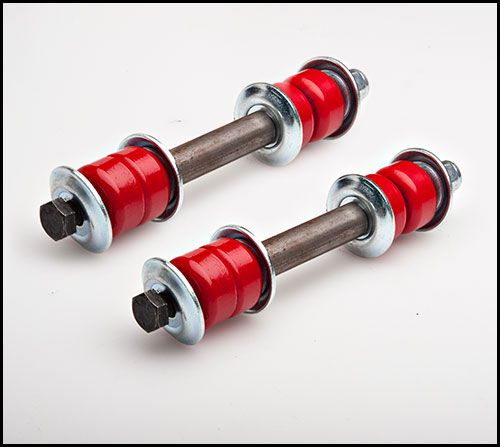
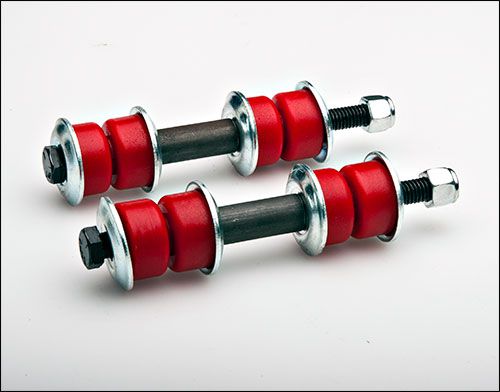
Once you lower the vehicle, though, adjustable links become the better option. They let you fine-tune sway bar preload and rebalance handling to compensate for the new ride height. DJM Suspension has designed made-in-USA options like the Lowering Control Arm Sway Bar Endlinks with a 2.375-inch Spacer and the Lowering Control Arm Sway Bar Endlink with a 1.75-inch Spacer.
These sway bar end links are built to restore the geometry on a lowered truck or SUV, matching spacer length to how far your vehicle has dropped. Just keep in mind that adjustable links take a bit more setup knowledge to get the length and preload dialed in correctly.
Here's a quick comparison of both sway bar end links:
| Feature | Fixed End Links | Adjustable End Links |
| Cost | Lower | Higher |
| Setup difficulty | Simple | Moderate |
| Best for | Stock or mild builds | Lowered or lifted rigs |
| Length tuning | None | Precise |
| Preload control | No | Yes |
Signs Your End Links Need Replacement
Bad end links announce themselves. And if you pay attention, you could catch the potential problems before handling or safety feels off.
Some of the common symptoms of bad sway bar end links are:
- A clunking noise front suspension owners hear over bumps or during turns
- Persistent sway bar end link noise like rattling or knocking at low speed
- Excessive body roll or a sloppy, disconnected steering feel
- Torn or cracked bushings visible during inspection
- Play in the ball joint when you grab the link by hand
- Uneven tire wear tied to loose or inconsistent suspension movement
Run a quick driveway check to identify these issues. Park your truck or SUV, grab each link, and push and pull. Solid links stay tight, while a worn link moves, knocks, or feels gritty. That slack is the source of most front-end noise complaints.
Pro Tip: Do the push-pull test with the wheels on the ground, not on a jack; end link play is easiest to feel with the suspension loaded.
Choosing the Right End Links for Your Truck or SUV
Selecting the right sway bar end links comes down to matching the part to your specific vehicle, ride height, and performance goals.
Match Length to Your Setup
Start with your vehicle model and drop depth. Stock-height trucks usually run factory-length sway bar end links. Lowered vehicles change the distance between the sway bar and control arm, so a stock link no longer fits the geometry. Those builds typically need adjustable end links to reset the correct angle.
Measure sway bar end link length from center to center between the two mounting points at normal ride height, with the suspension supporting the vehicle's weight. Measuring on a lift with the wheels hanging gives a false reading and leads to the wrong part.
Pick Material and Bushing Type
Material and bushing choice affect durability and feel. When choosing sway bar end links, keep in mind that:
- Steel links offer strength and a lower price. They suit daily drivers and work trucks.
- Aluminum links cut weight and resist corrosion. They appeal to performance and show builds.
- Polyurethane bushings are stiffer and last longer, sharpening response.
- Rubber bushings ride quietly and are softer, closer to factory feel.
Pro Tip: If your ride is mostly daily driving with occasional towing, steel with polyurethane bushings is usually the best durability-to-cost balance.
One rule matters above all: the bushing and link ends must match your sway bar diameter and mount style. A mismatched link won't seat correctly, and it will wear out fast as a result.
End Link Maintenance and Replacement Tips
Your sway bar end links don't need constant attention, just an occasional look. A little care goes a long way toward extending their life and protecting the parts around them.
Make it a habit to inspect the bushings during routine service. Watch for tearing, cracking, or a bushing that's gone flat and squished out of shape. Catching that wear early saves you from bigger problems down the line, since a failing bushing can end up damaging the sway bar mounts or control arm too.
Whether you're following a sway bar end link installation guide for a shop job or going DIY, the core steps stay the same no matter the vehicle:
- Support the suspension at ride height before you do any final tightening.
- Torque the fasteners to spec. Skip the temptation to crank them down further, since over-tightening crushes bushings and binds up the ball joints.
- Keep the link straight rather than cocked at an angle, so the ball joint can move the way it's designed to.
- If you're running adjustable sway bar links, set the length and preload evenly on both sides.
- Give the fasteners a recheck after a short drive to make sure everything's holding tight.
Any sway bar links replacement that changes the link length can shift your suspension geometry, so plan on an alignment afterward. That extra step keeps your tire wear even and your steering tracking true, which matters even more once you've lowered your rig.
FAQ
Do you need to get an alignment after replacing sway bar end links?
Yes, especially if the end link lengths have changed. Replacement can shift your suspension geometry and wheel alignment, so a follow-up alignment check is worth scheduling.
Do adjustable end links help when lowering your truck or SUV?
Yes. Lowering changes your suspension angles, and adjustable sway bar end links restore the sway bar geometry needed for proper handling.
What's the difference between sway bar links and sway bar end links?
There isn't one. Both terms refer to the same part: the connector between the sway bar and the suspension control arms.
Is there a top and bottom on sway bar links?
Yes. The upper end connects to the sway bar, and the lower end connects to the control arm. Installing it backward can bind the ball joints and cause premature wear, so always match each end to its correct mounting point.
Sway Bar End Links: Small Part, Big Impact on Your Lowered Ride
Small as they are, your sway bar end links carry a lot of weight in how your truck or SUV handles, especially after a lowering job or suspension upgrade. Watching for wear, matching the right length and type to your setup, and staying ahead of maintenance keeps handling sharp and predictable, corner after corner.
Ready to upgrade your truck or SUV suspension? Explore DJM Suspension's complete range of lowering kits, sway bars, and sway bar end links engineered for your vehicle.
Order the part you want online or contact our experts for guidance.
Products Featured in This Blog